A. LOCAL LEVEL
University–Local Government–Industry and Community Dialogue
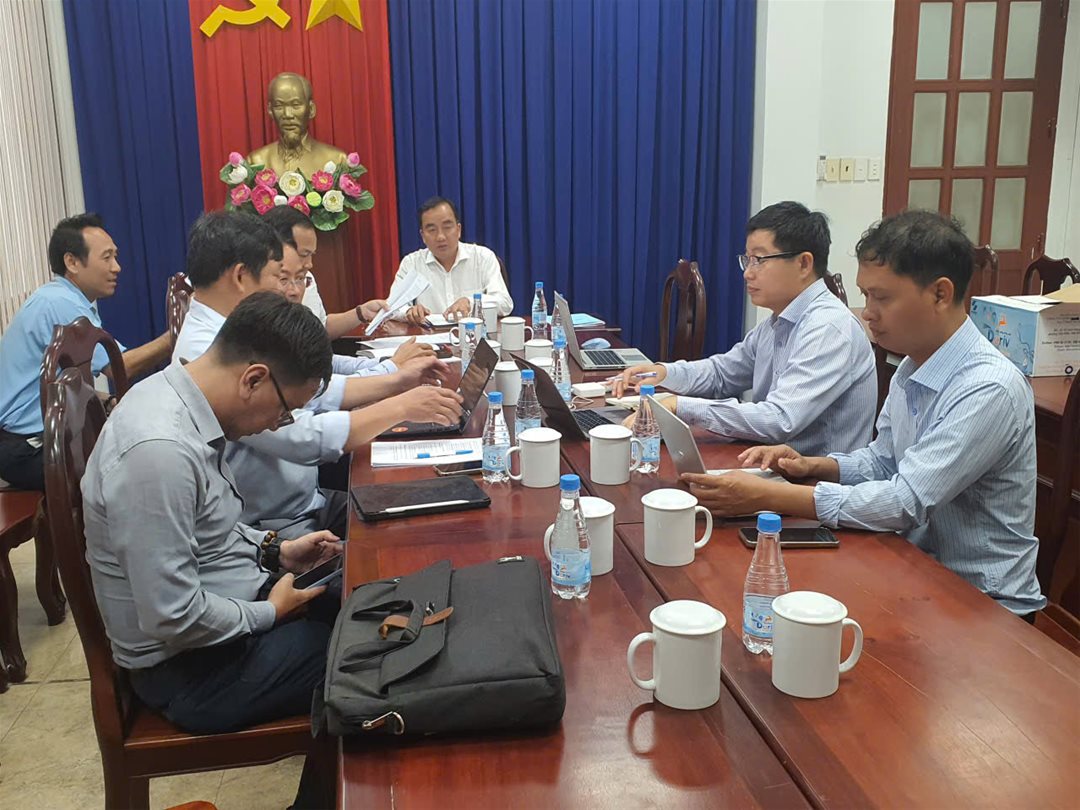
1. Tran Bien Digital Governance Dialogue (2026)
Date: June 23, 2026
Participating sectors: Tran Bien Ward People's Committee and Lac Hong University (LHU).
Lac Hong University, represented by Vice Rector Dr. Nguyen Van Tan and research experts, participated in a cross-sectoral dialogue with the Tran Bien Ward People's Committee on digital governance and public service improvement for 2026–2030. The dialogue addressed fragmented digital infrastructure and the need for integrated, citizen-centred public services. LHU shared its expertise in AI-driven administration and digital transformation, leading to a government request for the University to advise on a comprehensive digital governance framework and develop two priority initiatives: AI-assisted public administration and electronic health records.
Relevant SDGs: SDG 11 (Sustainable Cities and Communities), SDG 16 (Peace, Justice and Strong Institutions), and SDG 17 (Partnerships for the Goals).
Evidence: Tran Bien Digital Governance Dialogue
2. Tho Son Digital Inclusion and Community Development Dialogue (2026)
Date: September 18, 2026
Participating sectors: Dong Nai Department of Ethnic and Religious Affairs, Tho Son Commune People's Committee, Lac Hong University (LHU), local cooperatives, and community representatives.
Lac Hong University, represented by Vice Rector Dr. Nguyen Van Tan and its research team, participated in a multi-stakeholder dialogue and field assessment on digital inclusion for ethnic minority communities in Tho Son. The dialogue identified gaps in digital literacy, access to online public services, and digital adoption among local cooperatives. LHU was requested to collaborate with government authorities in developing digital skills training, community digital support centres, and technology-based livelihood solutions under the 2026–2030 development plan.
Relevant SDGs: SDG 4 (Quality Education), SDG 8 (Decent Work and Economic Growth), SDG 10 (Reduced Inequalities), and SDG 17 (Partnerships for the Goals).
Evidence: Tho Son Digital Inclusion and Community Development Dialogue
3. La Nga Community Innovation and Digital Transformation Dialogue (2026)
Date: September 30, 2026
Participating sectors: Dong Nai Department of Science and Technology, La Nga Commune People's Committee, Lac Hong University (LHU), and local community stakeholders.
Lac Hong University, represented by Vice Rector Dr. Nguyen Van Tan, Dr. Nguyen Thanh Son, and its research team, participated in a cross-sectoral dialogue with government authorities to develop a community innovation and digital transformation hub in La Nga Commune. The dialogue addressed challenges in agricultural product commercialisation, digital literacy, local tourism, and public administration. LHU proposed six areas of support, including e-commerce, local workforce training, online legal assistance, technology transfer, digital tourism mapping, and AI-assisted governance, contributing to community-oriented sustainable development strategies.
Relevant SDGs: SDG 4 (Quality Education), SDG 8 (Decent Work and Economic Growth), SDG 9 (Industry, Innovation and Infrastructure), SDG 11 (Sustainable Cities and Communities), and SDG 17 (Partnerships for the Goals).
Evidence: La Nga Community Innovation and Digital Transformation Dialogue
B. REGIONAL LEVEL
Provincial Government–University–Industry Dialogue
1. Dong Nai Science and Technology Development Conference (2026)
Date: March 31, 2026
Participating sectors: Dong Nai Department of Science and Technology, provincial government agencies, universities, research institutions, and enterprises.
Lac Hong University (LHU), represented by Vice Rector Dr. Nguyen Van Tan, Dr. Le Phuong Long, and faculty researchers, participated in a cross-sectoral conference on science, technology, innovation, and digital transformation priorities for 2026–2030. The conference reviewed 182 proposed research and technology initiatives. LHU contributed through two provincially approved projects involving AI-powered public service robots and AI virtual assistants for government officials, alongside four additional research proposals addressing healthcare, sustainable technology, and local development.
Relevant SDGs: SDG 9 (Industry, Innovation and Infrastructure), SDG 11 (Sustainable Cities and Communities), SDG 16 (Peace, Justice and Strong Institutions), and SDG 17 (Partnerships for the Goals).
Evidence: Dong Nai Science and Technology Development Conference
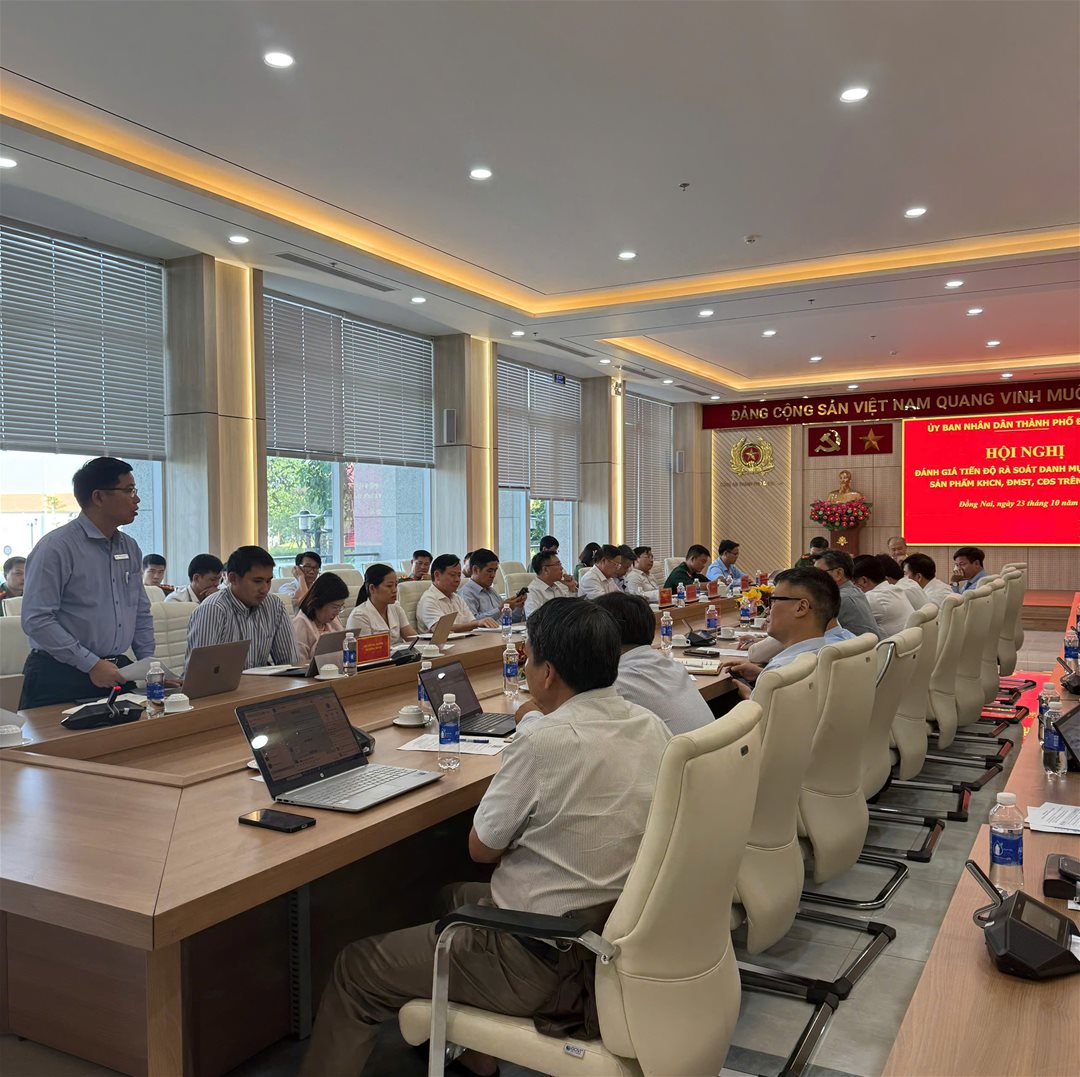
2. Government Review of Science, Technology and Digital Transformation Projects (2026)
Date: October 23, 2026
Supporting document: Official Letter No. 11454/UBND-KGVX (October 19, 2026).
Participating sectors: Dong Nai government agencies, universities, research institutions, enterprises, and commune/ward authorities.
Lac Hong University (LHU), represented by Vice Rector Dr. Nguyen Van Tan, participated in a government-led cross-sectoral dialogue reviewing science, technology, innovation, and digital transformation priorities. LHU reported progress on two AI-powered public administration projects with a combined budget of VND 2.066 billion, including VND 1.028 billion allocated (49.76%). The University also proposed a commune-level innovation hub pilot for 2027, integrating AI applications, digital skills training, agricultural product digitalisation, and community tourism, together with an evaluation framework and replication strategy.
Relevant SDGs: SDG 8 (Decent Work and Economic Growth), SDG 9 (Industry, Innovation and Infrastructure), SDG 11 (Sustainable Cities and Communities), SDG 16 (Peace, Justice and Strong Institutions), and SDG 17 (Partnerships for the Goals).
Evidence: Government Review of Science, Technology and Digital Transformation Projects
C. NATIONAL LEVEL
National Policy Dialogue on Education and Digital Transformation
The mid-term review conference on the implementation of Decision No. 78/QĐ-TTg, issued by the Prime Minister approving the “Program on Developing the System for Quality Assurance and Accreditation in Higher Education and Pedagogical Colleges for the 2022–2030 Period”, was held online under the organization of the Department of Quality Management (Ministry of Education and Training), with participation from seven higher education institutions nationwide.

Leadership Remarks
In his keynote address, Deputy Minister of Ministry of Education and Training, Dr. Nguyen Van Phuc, underscored the critical role of developing and refining Vietnam’s higher education quality assurance and accreditation system in the context of reform and global integration. He emphasized that accreditation is not merely an evaluative mechanism but a driving force for continuous improvement and sustainable development across universities.
The Deputy Minister acknowledged the proactive efforts of universities in advancing institutional autonomy and standardizing their Internal Quality Assurance (IQA) processes. He also encouraged strengthening collaboration between higher education institutions, domestic accrediting agencies, and international partners to promote the dissemination of effective quality management models.
He called on educational institutions to continue implementing the comprehensive measures outlined in Decision No. 78/QĐ-TTg, with particular attention to digital transformation in accreditation, capacity building for evaluators, and enhancing transparency and accountability—key pillars for improving the quality and reputation of Vietnam’s higher education system.

Implementation Results (2022–2025)
Presenting the progress report on the outcomes of Decision No. 78/QD-TTg implementation (2022–2025), Mr. Huynh Van Chuong, Director General of the Department of Quality Management (MOET), noted several remarkable achievements in developing the national and international quality assurance and accreditation system:
96.3% of higher education institutions have established dedicated quality assurance units;
89.7% have completed Cycle 1 institutional accreditation;
Over 2,637 study programs have been accredited, with 26.4% meeting international standards.
These results surpassed the mid-term targets set under Decision No. 78/QĐ-TTg, significantly contributing to enhancing educational quality, international integration, and the sustainable development of Vietnam’s higher education.
Conference Program
The conference featured two key sessions with seven presentations from leading universities and three from domestic accreditation organizations, sharing insights, models, and best practices in Internal Quality Assurance (IQA), program accreditation, and university ranking.
Session 1: University Experiences in IQA Development and Institutional Ranking
Assoc. Prof. Dr. Tran Thien Phuc, Vice President, Ho Chi Minh City University of Technology
“The Journey of Building an Internal Quality Assurance System: From Mechanism to Operational Tools.”
Assoc. Prof. Dr. Nghiem Xuan Huy, Director, Institute for Digital Education and Testing, Vietnam National University, Hanoi
“From Quality Assurance to University Ranking: A Sustainable Development Approach.”
Assoc. Prof. Dr. Huynh Trung Hieu, Vice President, Industrial University of Ho Chi Minh City
“Developing Information Systems to Support Effective Quality Management.”
Prof. Dr. Nguyen Trung Kien, President, Can Tho University of Medicine and Pharmacy
“Goal Management and Risk Management in Quality Assurance.”
Prof. Dr. Pham Van Cuong, Vice Director, Vietnam National University of Agriculture
“Continuous Quality Improvement: Building a Quality Culture from Everyday Practices.”
Dr. Lam Thanh Hien, President, Lac Hong University (LHU)
“Integrating International and National Accreditation: Strengthening Quality Improvement Capacity.”


Session 2: National Accreditation Organizations – IQA Status and Policy Recommendations
Assoc. Prof. Dr. Ta Thi Thu Hien, Director, Center for Education Accreditation, Vietnam National University, Hanoi
“Current Status and Challenges of Internal Quality Assurance Systems in Vietnamese Universities.”
Assoc. Prof. Dr. Nguyen Phuong Nga, Director, Center for Education Accreditation, Association of Vietnamese Universities and Colleges
“Building the Capacity of Accreditation Assessors: Current Situation, Challenges, and Solutions.”
Assoc. Prof. Dr. Le Ngoc Quynh Lam, Director, Center for Education Accreditation, Vietnam National University, Ho Chi Minh City
“From External Evaluation to Quality Enhancement: The Role of Accreditation Bodies in the Higher Education Ecosystem.”
Future Directions
The Mid-Term Review Conference (2022–2025) concluded with encouraging outcomes, reflecting the strong commitment of universities and accrediting agencies in building a more robust and effective quality assurance system. Presentations and discussions contributed to establishing a collaborative network among higher education institutions, fostering mutual learning, transparency, and international cooperation—in alignment with the goals of SDG 4 (Quality Education) and SDG 17 (Partnerships for the Goals).
Looking ahead to the 2025–2030 period, the Ministry of Education and Training will, based on stakeholder feedback and consultations on draft national accreditation standards, continue to refine policies, advance digital transformation, and develop a pool of accreditation experts—paving the way for a sustainable, high-quality, and globally integrated higher education system in Vietnam.
2. STIC program
Introduction to STIC:
The Science, Technology, and Innovation Cooperation Program (STIC) is sponsored by the U.S. Department of State’s Bureau of East Asian and Pacific Affairs and implemented by Arizona State University (ASU). The program aims to strengthen cooperation in science, technology, and innovation between the United States and Southeast Asian countries.
Main Objectives:
STIC focuses on promoting research collaboration, technology transfer, and talent development—particularly in areas such as sustainable energy, smart healthcare, artificial intelligence, environmental protection, and social sciences.
Vietnam’s Role:
Through STIC, Vietnam has opportunities to connect with the international science and technology network, enhance research capacity, apply advanced technologies, and develop high-quality human resources.
LHU’s Contribution:
Lac Hong University (LHU) plays an active role as a host institution for educational events introducing the STIC project to students, lecturers, and staff. The University encourages participation in innovation, entrepreneurship, and technology-oriented activities under the Program.
Achievement:
MPharm. Nguyen Thi Tuyet Nhung among 8 Seed Grant Winners at the 2023 STIC Conference
MPharm. Nguyen Thi Tuyet Nhung, a lecturer in the Department of Analytical Chemistry and Drug Quality Control, Faculty of Pharmacy at LHU, was named one of eight winners of the STIC Seed Grant Award worth USD 12,500.
Participants in the Program received online training courses focusing on three key areas: Science and Technology (S&T), Entrepreneurship and Innovation (E&I), and Professional Certificate Programs. Among hundreds of applicants, 70 participants who successfully completed both S&T and E&I tracks were sponsored to attend the STIC Annual Conference. From these, the top 8 projects were awarded funding of USD 12,500 each to implement their ideas.
With her project “Research on Herbal Medicine for Liver Cancer Treatment,” MPharm. Nguyen Thi Tuyet Nhung excelled and received the Seed Grant Award. She shared that it took her nearly two months to complete the STIC courses and challenges before being selected among the top 70 projects funded to attend the conference.

STIC program
D. GLOBAL LEVEL
International Cross-Sectoral Policy Dialogue
1. POL – International Conference on AI and Higher Education Policymaking (2026)
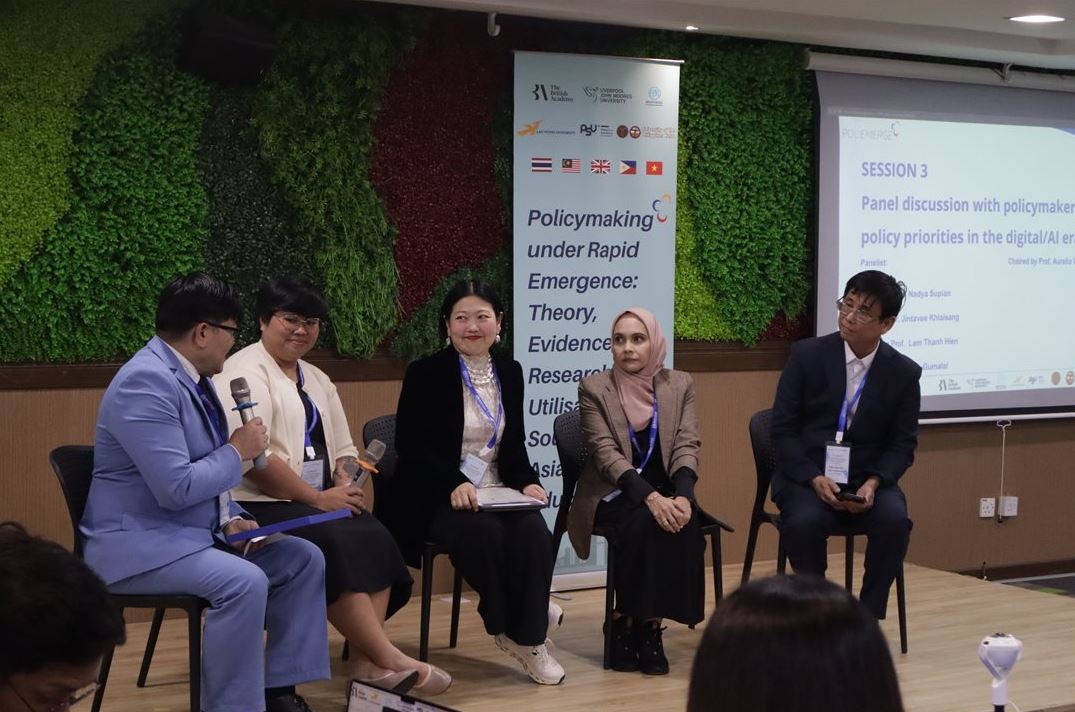
Date: March 10–11, 2026
Location: Kuala Lumpur, Malaysia
Participating sectors: Higher education institutions, international researchers, policymakers, government representatives, and education experts from Vietnam, Malaysia, the Philippines, and Thailand.
Lac Hong University (LHU), represented by its President, Assoc. Prof. Dr. Lam Thanh Hien, actively participated in the British Academy-funded POL international policy dialogue on artificial intelligence, evidence-based policymaking, and higher education governance. The University contributed through a presentation on AI Capacity Building for Policy and Governance and by chairing a policy co-creation session, facilitating cross-country discussions on integrating AI and research evidence into higher education policy development and institutional governance.
Relevant SDGs: SDG 4 (Quality Education), SDG 9 (Industry, Innovation and Infrastructure), SDG 16 (Peace, Justice and Strong Institutions), and SDG 17 (Partnerships for the Goals).
Evidence: POL – International Conference on AI and Higher Education Policymaking

